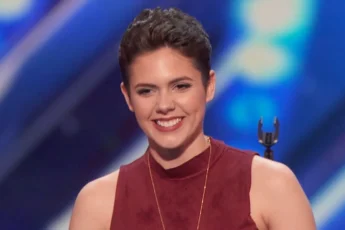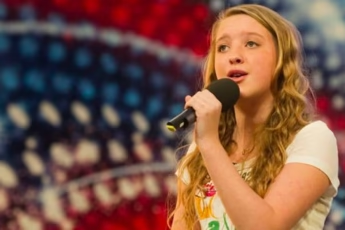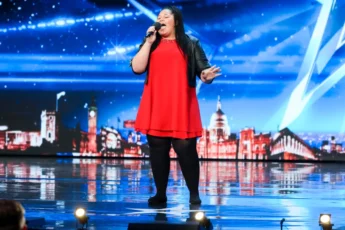
Lauren Platt, a talented 16-year-old student, stepped onto the stage at The X Factor auditions with a quiet confidence that immediately drew attention. At first glance, she appeared like many other hopeful contestants—young, slightly nervous, and aware of the massive opportunity in front of her. But there was also something different about her presence, a calm focus that suggested she wasn’t just there to try her luck. She was there to be heard. Choosing to perform a Whitney Houston classic is a bold decision for any singer, let alone someone still in their teens. Whitney’s songs are known for their technical difficulty, emotional depth, and the sheer vocal power required to do them justice. Many seasoned performers avoid them altogether because they leave very little room for error. But Lauren seemed fully aware of the challenge she was taking on, and instead of backing away from it, she embraced it with a fresh approach.
Before she even sang a note, there was a brief moment of anticipation in the room. The judges settled into their seats, the audience grew quiet, and the familiar opening of the song began to play. Then Lauren started to sing, and almost instantly, the atmosphere shifted. Her voice carried a softness at first, controlled and delicate, but there was an underlying strength that hinted at what was coming. As she moved deeper into the performance, that strength began to unfold more fully, revealing a voice that was both powerful and surprisingly mature for her age. It wasn’t just about hitting the right notes; it was about how she shaped them, how she controlled the emotion within each line, and how naturally she seemed to connect with the music.
What made her performance stand out even more was the way she approached the arrangement. Instead of simply imitating the original version, Lauren added subtle modern touches that gave the song a new identity. She didn’t strip away its essence—instead, she reinterpreted it through her own artistic lens. The result was a performance that felt familiar yet fresh, honoring Whitney Houston’s legacy while also showcasing Lauren’s individuality. It was clear she wasn’t trying to compete with the original; she was trying to express herself through it, and that distinction made all the difference.
As her vocals built in confidence and intensity, the judges began reacting in real time. Simon Cowell, known for his often reserved and analytical demeanor, looked noticeably intrigued, leaning forward as if trying to process what he was hearing. Cheryl also appeared genuinely impressed, exchanging glances with her fellow judges that reflected both surprise and admiration. These reactions weren’t exaggerated or staged—they were the natural response to a performance that was steadily exceeding expectations. The camera occasionally cut to the audience, where expressions of disbelief and excitement began to spread as Lauren continued to develop the song with increasing control.
There was a particularly striking moment in the middle of the performance where everything seemed to come together—her tone, her timing, and her emotional delivery aligned perfectly, creating a brief but powerful peak. It was in those seconds that it became clear this wasn’t just a strong audition; it was something that could be remembered. Lauren’s ability to maintain control while also allowing emotion to flow through her voice gave the performance a sense of authenticity that is often difficult to achieve, especially under the pressure of a live audition environment.
As the final section of the song approached, she held nothing back. Her voice rose with confidence, carrying the emotional weight of the lyrics without ever sounding strained or forced. Each note felt intentional, and there was a growing sense in the room that something special was unfolding. When she finally reached the closing moments of the performance, she delivered them with a combination of power and restraint that left a lasting impression. It wasn’t just about finishing the song—it was about completing a musical journey that she had taken everyone in the room on.
The second the final note faded, the reaction was immediate. The audience erupted into a standing ovation, rising to their feet in appreciation of what they had just witnessed. The applause filled the entire theater, echoing the energy that had been building throughout the performance. The judges joined in the praise, visibly impressed by what Lauren had managed to achieve at such a young age. It was the kind of moment that tends to stick in people’s memories—not because it relied on spectacle, but because it showcased genuine talent and emotional connection.
In the aftermath of the audition, it quickly became clear that Lauren Platt had made a strong impression far beyond the stage. Clips of her performance began circulating widely, drawing attention from viewers who were struck by her vocal ability and artistic maturity. For many, it was not just another good audition; it was a reminder of how powerful a well-delivered performance can be when it combines technical skill with emotional honesty. At just 16 years old, Lauren had managed to take on one of the most iconic songs in music history and make it feel personal, contemporary, and entirely her own.
As she left the stage, there was a sense that this moment marked the beginning of something much bigger. While the competition was only just starting for her, the impact of her audition had already extended far beyond it. Lauren Platt hadn’t just performed a song—she had introduced herself to the world in a way that felt confident, heartfelt, and unforgettable.