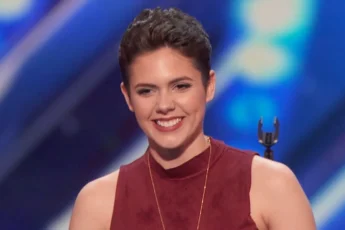
Jaycob Curlee, an eighteen-year-old student with a past marked by instability and hardship, stepped onto the stage of America’s Got Talent carrying far more than just a guitar. For most contestants, the spotlight represents an opportunity to showcase talent and chase a dream. For Jaycob, it was something deeper—a moment to share a story shaped by loss, resilience, and the search for belonging.
Growing up in the foster care system after being abandoned by his biological parents, Jaycob’s childhood was anything but predictable. Moving between homes meant constantly adjusting to new environments, new rules, and new people. It’s the kind of experience that can leave a person feeling untethered, unsure of where they truly belong. Through all of that, music became his constant. While everything else in his life shifted, his guitar remained steady in his hands, offering both an escape and a way to process emotions he didn’t always have words for.
He often spent hours alone, teaching himself chords, experimenting with melodies, and quietly building a connection to music that went beyond simple hobby. Singing became an outlet—a way to express pain, hope, and everything in between. Over time, it wasn’t just something he did; it became a part of who he was. That deep, personal relationship with music is what he carried with him onto the stage that night.
When Jaycob finally stood under the bright lights, there was a noticeable mix of nerves and determination in his posture. He spoke honestly about his upbringing, not in a way that sought pity, but in a way that helped the audience understand the weight behind his performance. His adoptive mother, watching from backstage, represented a turning point in his life—a symbol of the stability and love he had long been searching for.
As he began to play a well-known song by John Mayer, the room quickly fell silent. From the very first notes, there was a sense that this performance would be different. His voice wasn’t polished in a way that felt overly rehearsed; instead, it carried a raw, emotional quality that made every lyric feel personal. You could hear the story in his tone—the years of uncertainty, the quiet moments of loneliness, and the gradual emergence of hope.
The simplicity of the setup—just Jaycob, his guitar, and his voice—worked in his favor. There were no distractions, no elaborate staging. It allowed the audience to focus entirely on the emotion behind the music. As he moved through the song, his confidence seemed to grow. What began as a slightly nervous performance transformed into something powerful and deeply moving.
In the audience, reactions were immediate and genuine. Some people wiped away tears, while others leaned forward, completely absorbed in the moment. His adoptive mother, watching from the wings, was visibly emotional, her pride and love unmistakable. It was clear that this performance wasn’t just about talent—it was about connection. Jaycob wasn’t simply singing a song; he was sharing a piece of his life.
By the time he reached the final notes, the atmosphere in the room had shifted. There was a brief moment of silence, as if everyone needed a second to process what they had just experienced. Then came the applause—loud, sustained, and filled with appreciation not just for his voice, but for his courage.
The judges echoed what the audience was feeling. They spoke about the authenticity in his performance, the way his story enhanced rather than overshadowed his talent. It wasn’t framed as a sympathy vote; instead, they recognized that his life experiences had shaped him into an artist capable of delivering something truly genuine. They highlighted the emotional depth in his voice and encouraged him to continue developing his craft, emphasizing that his honesty is what sets him apart.
What made this moment resonate so widely wasn’t just the quality of his singing, but the journey behind it. Jaycob’s story is a reminder that difficult beginnings don’t define the end of the story. In his case, those challenges became a source of strength, fueling his artistry and giving his music a level of depth that can’t be taught.
As the video of his performance spread online, it struck a chord with viewers around the world. People connected with his vulnerability, his perseverance, and the quiet determination that carried him to that stage. For many, it served as a powerful example of how creativity can emerge from hardship, transforming pain into something meaningful.
Jaycob’s journey—from a childhood filled with uncertainty to a moment of recognition on a national stage—continues to inspire. It’s not just about making it on a talent show; it’s about finding a voice, holding onto it, and using it to tell a story that matters.