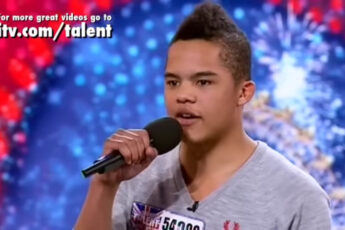
Seventeen-year-old Neve from Ireland completely transformed the stage of Britain’s Got Talent with a performance that challenged everything people thought they knew about her instrument. When she first walked out carrying her harp, there was a quiet curiosity in the room. The harp, after all, is usually associated with soft classical pieces or gentle background music—not the kind of thing you expect to headline a high-energy talent show performance. Neve herself matched that expectation at first glance. She seemed calm, a little reserved, and softly spoken, with the kind of presence that doesn’t immediately demand attention.
But that contrast is exactly what made what followed so unforgettable.
As she settled behind her harp, there was a brief pause, the kind that always comes before something unexpected. The audience watched closely, unsure of what direction she would take. Then she began to play. The first notes were delicate and precise, instantly filling the space with a sound that felt almost otherworldly. It was beautiful, but still within the realm of what people might expect—until she started to sing.
The moment her voice entered, everything changed.
What came out was not timid or fragile, but clear, controlled, and surprisingly powerful. It carried across the room with an emotional depth that caught everyone off guard. Her choice to reinterpret a modern hit, originally by Alex Warren, added another layer of surprise. Instead of relying on the original arrangement, she built something entirely new around it. The harp didn’t sit quietly in the background—it drove the performance, creating a unique blend of classical elegance and contemporary emotion.
As the song progressed, the combination of her voice and the harp created a kind of atmosphere that was hard to ignore. The strings added a shimmering texture, while her vocals brought intensity and clarity. It felt fresh, almost like discovering a new genre in real time. The audience, who had started out simply curious, quickly became fully engaged. You could see it in their faces—the shift from mild interest to genuine amazement.
What made the moment even more powerful was the contrast between Neve’s demeanor and her performance. She didn’t move dramatically or try to command the stage in an obvious way. Instead, she stayed grounded, letting the music speak for itself. That restraint made the impact even stronger. It felt authentic, like she wasn’t trying to impress anyone—she was simply sharing something she cared deeply about.
The judges’ reactions mirrored what the audience was feeling. KSI, known for his energetic personality, seemed genuinely captivated, describing her voice as “angelic.” It wasn’t said casually—you could tell he was trying to process how someone so unassuming could produce something so striking. Simon Cowell, who has seen countless auditions over the years, leaned into the uniqueness of her performance. He pointed out how rare it is to see an act that feels completely original, especially one that redefines how an instrument like the harp can be used in a modern setting.
That sense of originality is what gave the audition its viral edge. It wasn’t just about talent, though Neve clearly had that in abundance. It was about perspective—about taking something traditional and reshaping it into something current and exciting. In a competition filled with singers and performers trying to stand out, she managed to do it in a way that felt effortless.
Behind the performance, there was also a quieter, more personal story unfolding. Neve’s mother sat in the audience, watching closely, sharing in every moment of anticipation and pride. Knowing she had that support added an emotional layer to the performance. It’s one thing to step onto a stage like that alone, but having someone who has likely supported you through years of practice and doubt makes the moment feel even more meaningful.
By the time she reached the final notes, the room was completely still, as if no one wanted to break the moment too soon. Then came the applause—loud, immediate, and well deserved. It wasn’t just appreciation for a good performance; it was recognition of something genuinely different.
When the judges delivered their verdict, the four “yes” votes felt inevitable. There was no hesitation, no debate. They recognized not only her ability, but her potential to bring something new to the music world. They praised her “clean, clear voice” and the way she made the harp feel relevant in a modern context, something not many performers could achieve.
In the end, Neve’s audition became more than just a successful moment on a talent show. It turned into a kind of blueprint—a reminder that blending tradition with innovation can lead to something truly special. She didn’t abandon the classical roots of her instrument; she expanded them, showing how they can fit into today’s musical landscape.
Her journey from a quiet, slightly nervous teenager to a standout performer in just a few minutes is exactly the kind of story that resonates with people. It’s about taking something unexpected and turning it into something unforgettable. And in doing so, Neve didn’t just secure her place in the competition—she redefined what people thought was possible.